
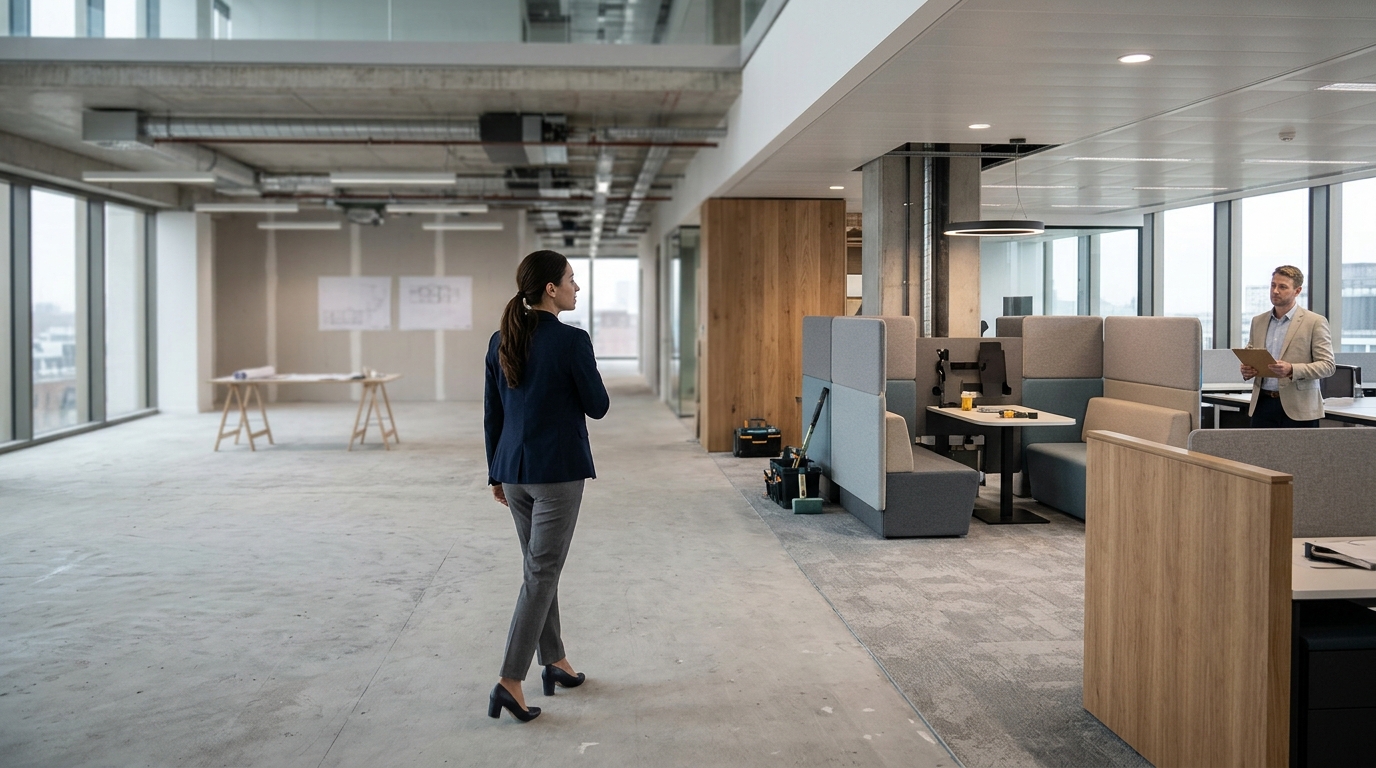
Choosing between a full workplace refurbishment and a standard office fit out depends on your current lease status, budget, and operational goals. A standard fit out is ideal for new tenants moving into a Cat A shell, while a refurbishment suits existing occupants seeking to upgrade their current space without relocating. Spectrum Workplace advises that the right choice hinges on whether you are starting from a blank canvas or optimizing an established environment.
Standard Office Fit Out
A standard office fit out is the process of transforming a raw or basic shell space into a functional workplace. This typically occurs when a tenant signs a lease for a new location or takes over a space that has been stripped back to its core structure. The primary goal is to make the space usable and aligned with the tenant's brand and operational needs from day one.
Strengths and Scope
Fit out projects offer a clean slate, allowing for complete control over layout, aesthetics, and technology integration. Because the space is often in a Cat A condition, which includes basic services like lighting, heating, and raised floors, the focus shifts to Cat B elements such as partitions, furniture, and branding. This approach is best suited for organizations that are relocating or expanding into new premises.
Limits and Considerations
The main limitation of a fit out is the dependency on the building's existing infrastructure. If the core services are outdated or insufficient, the fit out may require additional technical upgrades that can increase costs. Additionally, fit out projects are often tied to strict lease deadlines, which can compress the design and delivery timeline. For organizations that do not need to move, a fit out is not the appropriate solution.
Full Workplace Refurbishment
A full workplace refurbishment is a comprehensive upgrade of an existing occupied or unoccupied office space. Unlike a fit out, which starts from a shell, a refurbishment works within the constraints of an established environment. The objective is to modernize, reconfigure, or enhance the current space to improve productivity, culture, and sustainability without the disruption of a full relocation.
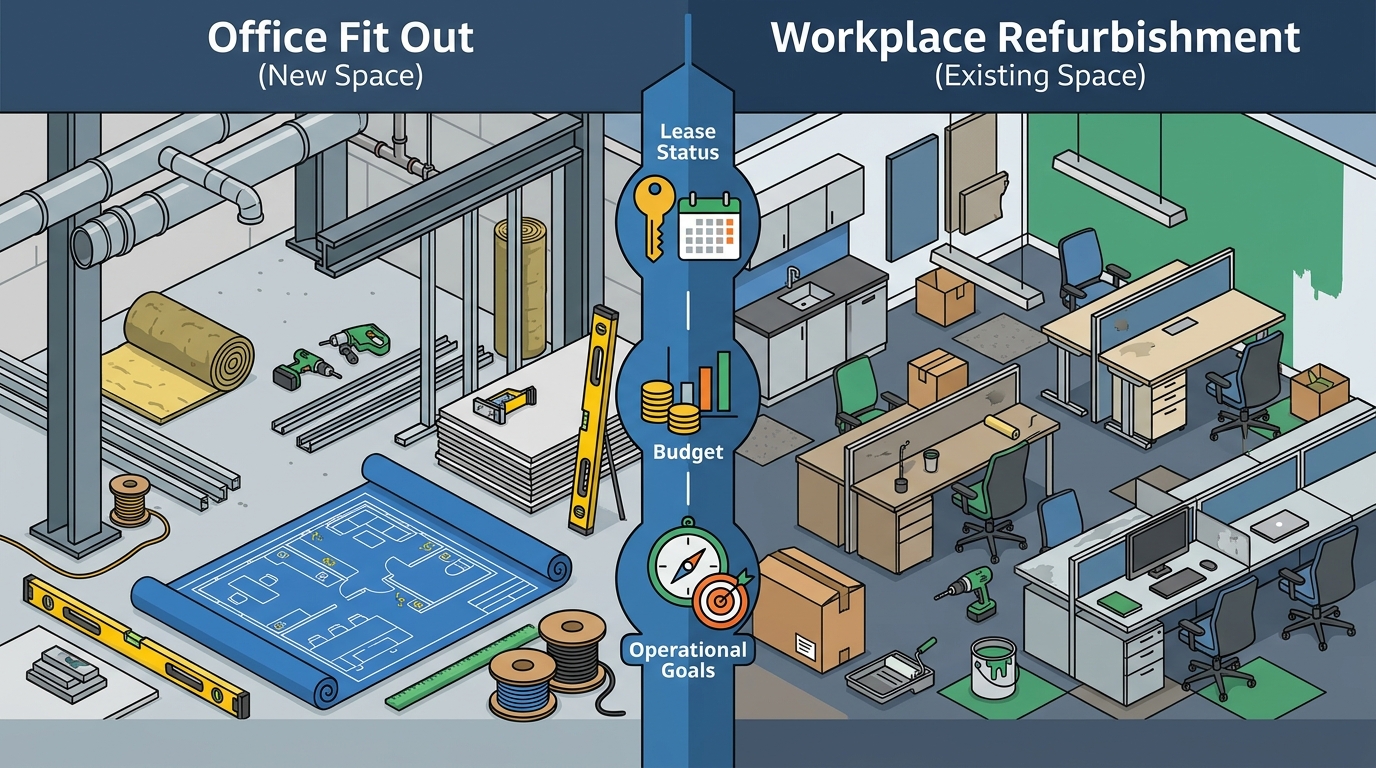
Strengths and Scope
Refurbishments allow organizations to retain their current location, which preserves brand presence and reduces the costs associated with moving. They offer the opportunity to address specific pain points, such as poor acoustics, inefficient layouts, or outdated technology. Spectrum Workplace often finds that refurbishments can be phased to minimize business disruption, allowing teams to continue working while the space is transformed.
Limits and Considerations
The primary challenge of a refurbishment is working within the existing building fabric. Structural elements, fixed services, and lease restrictions can limit design flexibility. Additionally, refurbishments in occupied buildings require careful planning to manage noise, dust, and access. This approach is best suited for organizations that are happy with their location but need a significant upgrade to their workspace.
Comparison Table
| Criteria | Standard Office Fit Out | Full Workplace Refurbishment |
|---|---|---|
| Starting Point | Raw or Cat A shell space | Existing occupied or unoccupied office |
| Primary Goal | Make new space functional and branded | Upgrade and optimize current space |
| Disruption Level | High (new location setup) | Medium (phased delivery possible) |
| Design Flexibility | High (clean slate) | Moderate (constrained by existing fabric) |
| Typical Timeline | 8-16 weeks | 12-24 weeks (phased) |
| Best For | Relocating or expanding tenants | Existing tenants seeking modernization |
Decision Guidance
Choosing between these two project types requires a clear understanding of your organizational needs and constraints. The following guidance helps you determine which approach aligns with your goals.
Choose a Standard Office Fit Out If:
- You are relocating to a new location or expanding into additional space.
- You want a complete brand refresh and a clean slate for design.
- Your current lease is expiring and you are not renewing.
- You need to establish a new presence in a different city or region.
Choose a Full Workplace Refurbishment If:
- You are happy with your current location but need a significant upgrade.
- You want to improve productivity, culture, or sustainability without moving.
- Your current space is underutilized or inefficiently laid out.
- You want to minimize the disruption and cost associated with a relocation.
Frequently Asked Questions
Can a refurbishment be phased to avoid business disruption?
Yes, refurbishments can be phased to allow teams to continue working while the space is upgraded. This requires careful planning and coordination with a project management team that can manage access, noise, and safety. Spectrum Workplace specializes in phased delivery to minimize impact on daily operations.
What is the typical cost difference between a fit out and a refurbishment?
Costs vary widely based on scope, location, and specification. Generally, fit outs may have higher initial costs due to the need to install all services and finishes from scratch. Refurbishments can be more cost-effective if the existing infrastructure is in good condition, but they may require additional investment to upgrade outdated systems. A detailed budget from a professional partner is essential for accurate comparison.
How long does a standard office fit out take?
A standard office fit out typically takes between 8 and 16 weeks, depending on the size of the space and the complexity of the design. This timeline includes design, procurement, and construction. Delays can occur if there are issues with building services or if the lease deadline is tight.
Can I combine elements of both a fit out and a refurbishment?
Yes, some projects involve a hybrid approach where certain areas are fully refitted while others are refurbished. This is common in large offices where different departments have different needs. A strategic brief can help determine the best mix of fit out and refurbishment elements for your organization.
What role does sustainability play in the decision?
Sustainability is a key factor in both fit outs and refurbishments. Refurbishments often have a lower carbon footprint because they reuse existing building fabric and services. Fit outs can also be sustainable if they incorporate energy-efficient systems and materials. Spectrum Workplace integrates sustainable design principles into all projects to support your ESG goals.
How do I choose the right partner for my project?
Choose a partner with experience in both fit out and refurbishment projects, as well as a strong track record in your industry. Look for a team that offers end-to-end services, from strategy and design to construction and integration. Spectrum Workplace provides director-led projects with a single point of contact, ensuring clarity and accountability throughout the process.
Next Steps
Whether you are planning a relocation or a major upgrade, the right decision starts with a clear understanding of your needs. Spectrum Workplace offers expert guidance to help you navigate the complexities of workplace transformation. To discuss your project, for a free consultation.