
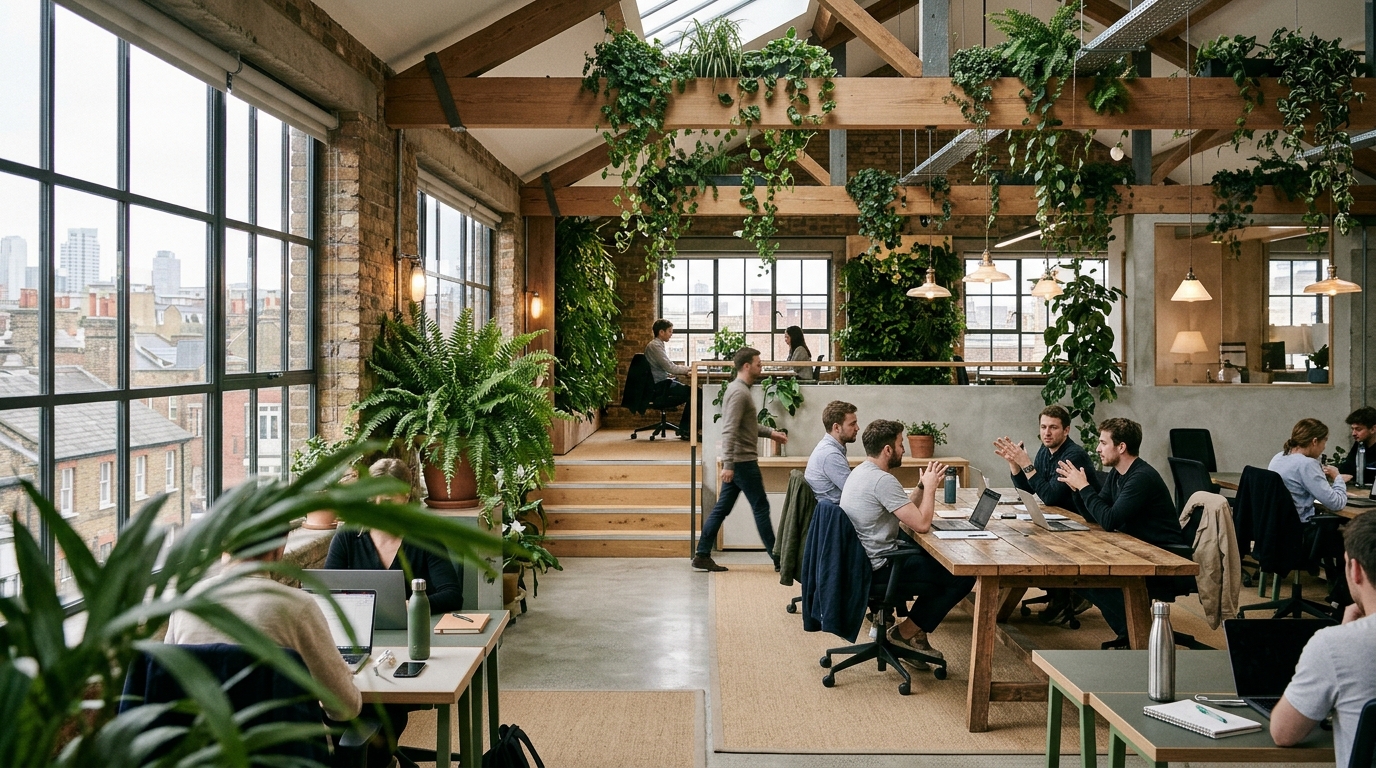
Designing a sustainable office in London requires balancing environmental performance with employee wellbeing and operational efficiency. It is not just about installing energy-efficient lighting or using recycled materials. A truly sustainable workspace is a strategic redesign that optimizes how people work, reduces the carbon footprint of the building, and supports long-term business growth. Spectrum Workplace, a UK-based partner, approaches this by treating workplace change as a people problem before a property one, ensuring that sustainability drives both environmental and human outcomes.
Defining Sustainable Office Design
Sustainable office design is the practice of creating work environments that minimize environmental impact while maximizing occupant health and productivity. In the context of London, this definition extends beyond simple energy saving to include the lifecycle of materials, the quality of indoor air, and the adaptability of the space. Many organizations confuse sustainability with a specific aesthetic or a single technology. However, the core principle is reducing waste and resource consumption across the entire building lifecycle. This means looking at how the office is built, how it is used, and how it will be decommissioned or repurposed in the future.
The evidence for this approach is clear. Buildings account for a significant portion of global carbon emissions, and the office sector is a major contributor. By focusing on whole-life carbon, organizations can make decisions that have a lasting positive impact. For example, choosing low-carbon structural materials or designing for disassembly allows components to be reused in future projects. This shifts the focus from short-term cost savings to long-term value creation. The implication is that sustainability is a business strategy, not just a compliance exercise. It requires a holistic view of the workplace that integrates environmental, social, and economic factors.
The Role of Indoor Environmental Quality
Indoor environmental quality (IEQ) is a critical component of sustainable office design, directly linking building performance to human health. Poor IEQ, characterized by inadequate ventilation, poor lighting, and excessive noise, leads to decreased productivity, increased absenteeism, and higher staff turnover. In London, where many offices are located in older buildings with limited natural light and ventilation, improving IEQ is often the most impactful sustainability intervention. It is a definition that matters because it connects the physical environment to the people who use it. A sustainable office must be a healthy office.
Research consistently shows that improved IEQ leads to measurable business benefits. For instance, better air quality can reduce sick days, while natural light can improve mood and cognitive function. Spectrum Workplace’s approach to sustainable office design prioritizes these human-centric factors. They work with clients to assess current IEQ conditions and design solutions that address them. This might involve upgrading HVAC systems, introducing daylight harvesting controls, or specifying low-VOC materials. The evidence is that when people feel healthy and comfortable, they are more engaged and productive. The implication is that investing in IEQ is an investment in human capital, which is often more valuable than the building itself.
Energy Efficiency and Renewable Integration
Energy efficiency is the backbone of any sustainable office strategy, but it is not the whole story. In London, the focus is shifting from simply reducing energy consumption to optimizing energy use and integrating renewable sources. This means looking at the building’s energy model, identifying peak demand periods, and implementing smart controls that adjust heating, cooling, and lighting in real-time. It is a technical challenge that requires coordination between mechanical, electrical, and data systems. A sustainable office is one that uses the least amount of energy possible to deliver the required comfort and functionality.
Material Selection and Circular Economy
Material selection is a key lever for reducing the embodied carbon of an office fit-out. The circular economy is a model that aims to eliminate waste and keep resources continually in use. In practice, this means specifying materials that are durable, repairable, and recyclable. It also means considering the source of materials, favoring those with low transportation emissions and certified sustainable sourcing. A sustainable office is one that minimizes the extraction of virgin resources and maximizes the reuse of existing materials. This approach challenges the traditional linear model of make, use, and dispose.
The evidence for circular design is growing. Studies show that the construction and demolition sector is one of the largest generators of waste in the UK. By designing for disassembly, organizations can recover valuable materials at the end of a fit-out’s life. Spectrum Workplace’s design team works with suppliers to specify materials that meet circularity criteria. They also consider the aesthetic longevity of materials, choosing finishes that will age well and remain relevant for many years. This reduces the need for frequent refurbishments, which is a significant source of waste and carbon. The implication is that material choice is a long-term decision that affects both the environment and the bottom line. It requires a shift in mindset from short-term aesthetics to long-term value.
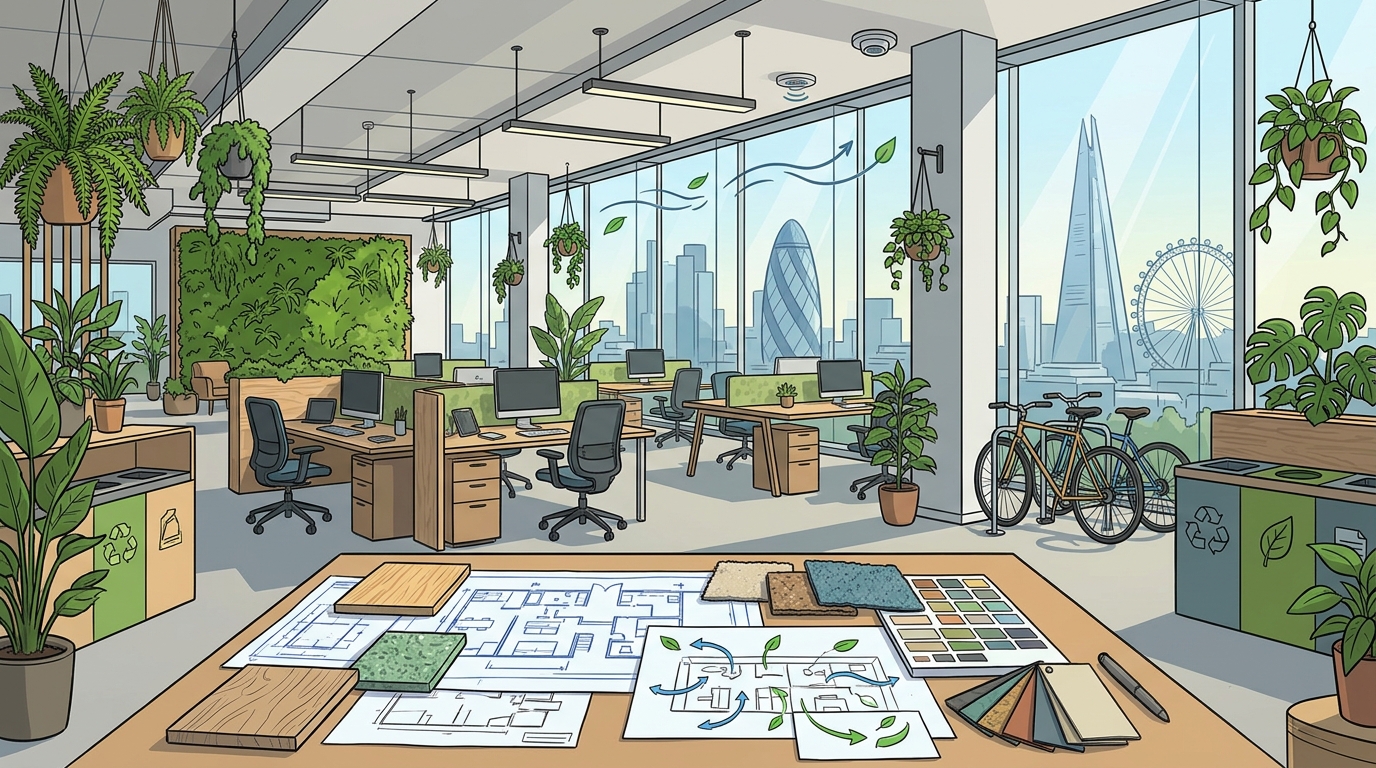
The Spectrum Workplace Approach
Spectrum Workplace brings a unique perspective to sustainable office design in London. As a director-led firm, they ensure that every project is guided by senior expertise and a deep understanding of the client’s business. Their four-stage framework, Align, Design, Deliver, and Integrate, ensures that sustainability is embedded at every step. The Align stage involves a thorough analysis of the organization’s needs and sustainability goals. The Design stage translates these goals into a functional and efficient space. The Deliver stage manages the construction process to ensure quality and compliance. The Integrate stage supports staff adoption and long-term performance.
This end-to-end approach is a key differentiator. Many firms hand off the project to a contractor after design, leading to a loss of continuity and accountability. Spectrum Workplace stays involved through to handover and beyond, ensuring that the sustainable features of the office are used effectively. They have delivered projects for clients across gaming, financial services, and legal sectors, each with unique sustainability challenges. For example, a project for a leading law firm in St Paul’s focused on enhancing collaboration and wellbeing within a traditionally outdated environment. The result was a space that was not only more sustainable but also more engaging and productive. The implication is that sustainability is not a standalone feature but an integral part of the overall workplace strategy.
Key Takeaways
- Sustainable office design is a strategic redesign that balances environmental performance with employee wellbeing and operational efficiency.
- Indoor environmental quality (IEQ) is a critical component, directly linking building performance to human health and productivity.
- Energy efficiency must be tailored to the specific needs of the business, using smart controls and renewable integration.
- Material selection should follow circular economy principles, favoring durable, repairable, and recyclable options.
- An end-to-end approach, from strategy to integration, ensures that sustainability is embedded at every stage of the project.
- Director-led expertise and a clear framework, such as Spectrum Workplace’s Align, Design, Deliver, and Integrate model, provide accountability and continuity.
- Sustainability is a business strategy, not just a compliance exercise, driving long-term value creation.
Frequently Asked Questions
What is the most important aspect of sustainable office design?
The most important aspect is balancing environmental performance with human wellbeing. A sustainable office must be healthy, comfortable, and productive for its occupants. This means prioritizing indoor environmental quality, such as air quality, lighting, and acoustics, alongside energy efficiency and material choice.
How does Spectrum Workplace ensure sustainability in its projects?
Spectrum Workplace ensures sustainability through its four-stage framework: Align, Design, Deliver, and Integrate. This approach embeds sustainability goals at every stage, from initial strategy to post-handover support. Their director-led team provides senior expertise and accountability throughout the project.
What is the role of the circular economy in office design?
The circular economy aims to eliminate waste and keep resources in use. In office design, this means specifying materials that are durable, repairable, and recyclable. It also involves designing for disassembly, so that components can be reused in future projects, reducing the need for virgin materials.
How can I improve the indoor environmental quality of my office?
You can improve indoor environmental quality by upgrading ventilation systems, introducing natural light, and specifying low-VOC materials. Smart controls can also help maintain optimal conditions by adjusting heating, cooling, and lighting in real-time. A professional assessment can identify specific areas for improvement.
Is sustainable office design more expensive than traditional design?
While the upfront cost of sustainable features may be higher, the long-term savings in energy, maintenance, and staff productivity often outweigh the initial investment. Additionally, a sustainable office can enhance brand reputation and attract top talent, providing further business benefits.
What are the benefits of a director-led approach to workplace projects?
A director-led approach ensures that senior expertise is applied to every aspect of the project. This provides greater accountability, better decision-making, and a stronger alignment with the client’s strategic goals. It also ensures that the project is managed with a high level of care and attention to detail.
Conclusion
Designing a sustainable office in London is a complex but rewarding endeavor. It requires a holistic approach that integrates environmental, social, and economic factors. By focusing on indoor environmental quality, energy efficiency, and circular material selection, organizations can create workspaces that are not only sustainable but also highly productive and engaging. Spectrum Workplace, with its director-led approach and end-to-end framework, is well-positioned to help organizations navigate this journey. To discuss your workplace transformation, contact our team to explore how we can help you create a sustainable and successful workspace. Learn more: Contact Spectrum Discuss Your.