

Staff buy-in is the active engagement and support of employees during a workplace change. It is the critical factor that determines whether a new office becomes a vibrant hub or an underused space. Spectrum Workplace treats this as a people problem before a property one, ensuring your team is ready to use the space you build. For additional details, review the Contact Spectrum Discuss Your.
1. Start with a Clear and Honest Brief
Clarity prevents the anxiety that kills engagement. Most workplace challenges begin with an unclear or misaligned brief. When staff do not understand why the change is happening, they resist it. You must communicate the business drivers and the expected benefits to your team before the first wall is moved.
2. Involve Staff in the Design Process
People support what they help create. Involving employees in the design phase transforms them from passive recipients into active participants. Spectrum Workplace uses staff surveys and structured working group facilitation to capture genuine needs. This ensures the final layout reflects how your team actually works, not just how leadership imagines they should work. according to The Art of
3. Appoint Visible Champions
Peer influence is stronger than top-down mandates. Identify influential individuals within your organisation who are excited about the change. These champions can answer questions, address concerns and model the new ways of working. Their credibility with colleagues is far higher than that of a project manager or external consultant.
4. Communicate the 'Why' Continuously
Consistent messaging builds trust and reduces uncertainty. A single announcement is not enough. You need a sustained communication plan that updates staff on progress, decisions and timelines. Regular updates from leadership show that the project is being managed with care and transparency. This keeps the momentum alive and prevents rumours from filling the information gaps.
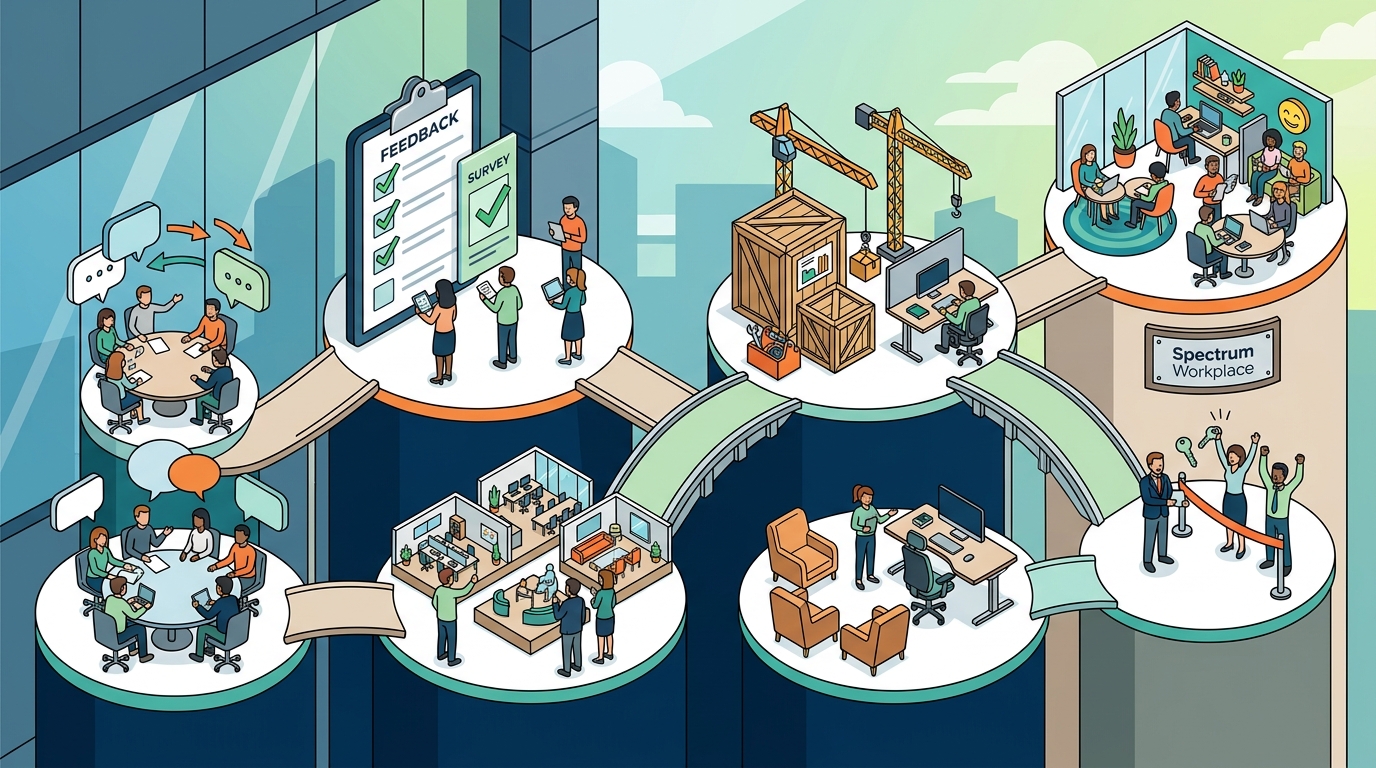
5. Provide Training on New Tools and Spaces
Confidence in using the space drives adoption. A new office often introduces new technology, booking systems and spatial concepts. Staff who do not know how to use these features will avoid them. Provide practical training sessions and clear guidance on how to use the new environment effectively. This removes the friction that often leads to a return to old habits.
6. Plan for a Smooth Transition
Disruption during the move can undo months of goodwill. The physical relocation is a high-stress event for any team. A well-planned move minimises downtime and confusion. Spectrum Workplace manages the transition with pre-move communications and staff briefings. This ensures people arrive informed, engaged and ready to make the space their own.
7. Support Adoption After Handover
Buy-in is not a one-time event; it is an ongoing process. The project does not end when the contractors leave. You must support your team as they settle into the new environment. This includes addressing early issues, gathering feedback and reinforcing the benefits of the new space. Long-term integration ensures the workplace continues to deliver value well after the initial excitement fades.
Choosing the Right Approach
The most effective strategy combines early involvement with continuous support. You do not need to do everything at once, but you must address the human side of the change with the same rigour as the technical side. A workplace only creates value when people use it well.
Frequently Asked Questions
How early should we involve staff in the refurbishment process?
As early as possible, ideally during the strategy and brief building phase. Early involvement ensures the design reflects real needs and builds ownership from the start.
What if staff are resistant to the change?
Resistance is normal. Address it by listening to concerns, explaining the benefits clearly and involving resistant individuals in the process. Often, resistance stems from a lack of understanding rather than opposition to the change itself.
Do we need a dedicated change manager?
Not necessarily, but you need dedicated time and responsibility for change management. This can be a project manager, HR lead or a combination of internal champions and external support.
How do we measure success after the move?
Track usage rates, staff satisfaction scores and feedback on specific features. Regular check-ins in the first three months are more valuable than a single post-move survey.
Can we do this without a large budget?
Yes. Change management is about communication and involvement, not just spending. Clear communication, staff involvement and good training are low-cost but high-impact actions.How do we keep momentum after the initial launch?
Continue to communicate, gather feedback and make small improvements based on usage. Treat the first few months as a pilot period where you can refine the space and processes.
according to Change Management Strategies