
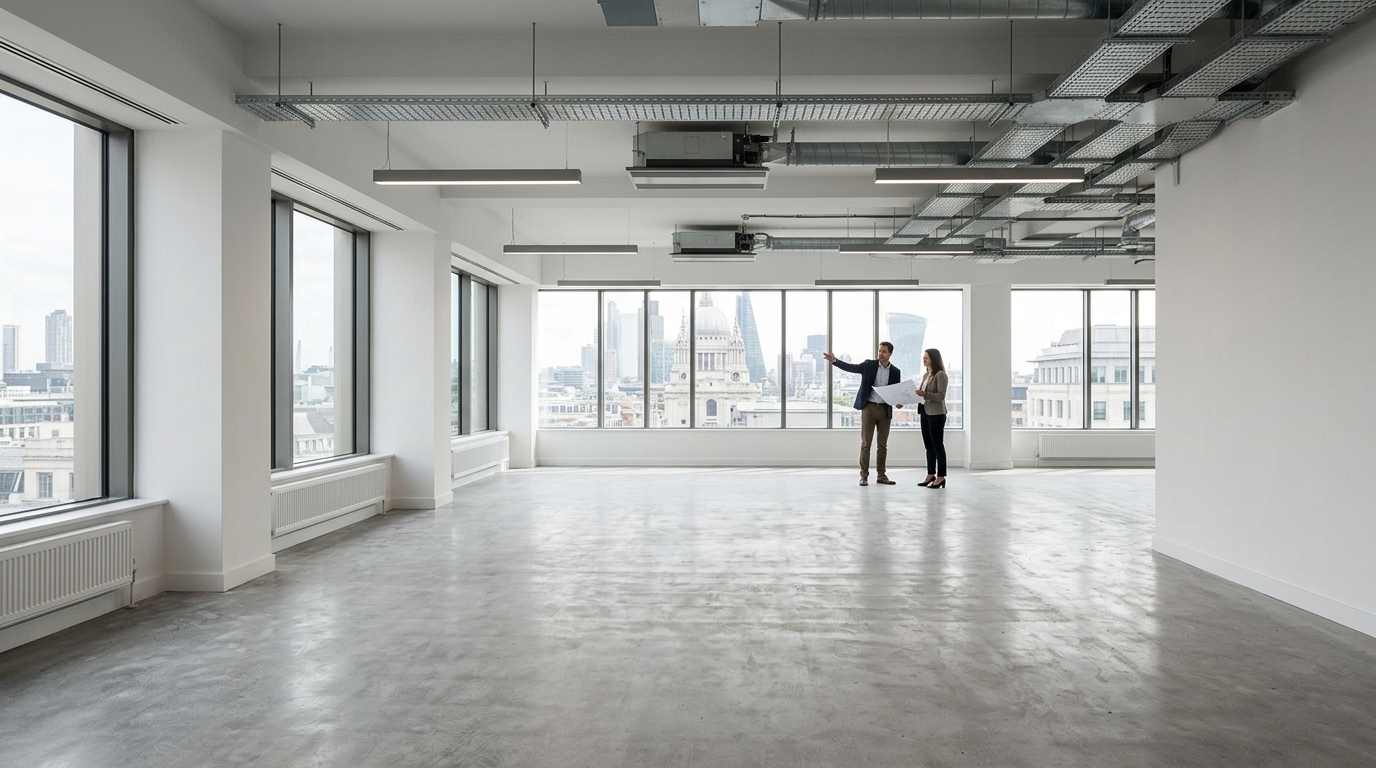
A Cat A fit out is a landlord-led upgrade that prepares a bare shell for basic occupancy, whereas other refurbishment options like Cat B or full design and build projects are tenant-led and focus on brand, culture, and specific operational needs. The primary difference lies in who pays for the work and what the finished space is designed to achieve. Understanding this distinction helps businesses budget accurately and avoid costly surprises when moving into new premises.
The Core Difference: Landlord vs Tenant Responsibility
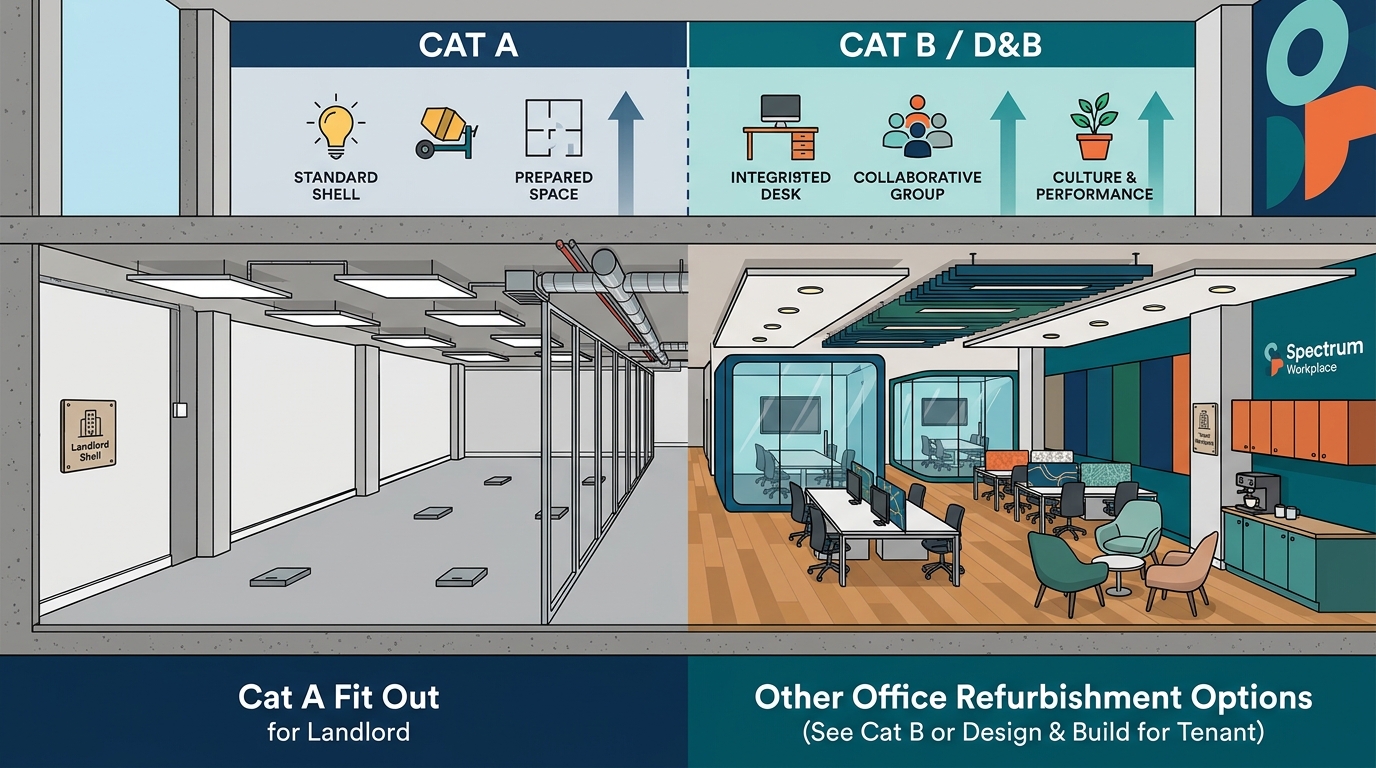
The most critical distinction between a Cat A fit out and other options is the financial and operational responsibility. A Cat A fit out is typically the landlord's obligation. It transforms a raw construction shell into a habitable, basic office environment. This usually includes suspended ceilings, basic lighting, heating, ventilation, and carpeting. The goal is to make the space lettable, not necessarily comfortable or branded.
In contrast, a Cat B fit out is the tenant's responsibility. It takes the Cat A shell and customizes it to reflect the company's identity. This involves partitioning, bespoke joinery, premium flooring, and technology integration. When a business chooses a full design and build service, they are often managing both the Cat A compliance and the Cat B aesthetic, ensuring the space aligns with their strategic goals from day one.
Cost Implications and Budget Planning
Cost structures vary significantly between these options. Because the landlord funds the Cat A works, tenants often perceive this as a For additional details, review the About Spectrum Workplace Strategic.